mirror of
https://github.com/alkimake/paperclip.git
synced 2026-06-14 01:50:39 +09:00
 778e775c35
## Thinking Path
> - Paperclip orchestrates AI-agent companies and needs secrets handling
to work across local development, hosted operators, and governed agent
execution.
> - The affected subsystem is the company-scoped secrets control plane:
database schema, server services/routes, CLI workflows, and the Secrets
settings UI.
> - The gap was that secrets were local-only and operators could not
manage provider vaults or import existing remote references without
exposing plaintext.
> - This branch adds provider vault configuration plus an AWS Secrets
Manager remote-import path while preserving company boundaries, binding
context, and audit trails.
> - I kept the PR to a single branch PR, removed unrelated
lockfile/package drift, rebased the full branch onto the current
`public-gh/master`, and addressed fresh Greptile findings.
> - The benefit is a reviewable implementation of provider-backed
secrets with focused tests covering provider selection, import
conflicts, deleted secret reuse, rotation guards, and AWS signing
behavior.
## What Changed
- Added provider vault support for company secrets, including provider
config storage, default vault handling, health checks, binding usage,
access events, and remote import preview/commit.
- Added an AWS Secrets Manager provider using SigV4 request signing,
bounded request timeouts, namespace guardrails, cached runtime
credential resolution, and external-reference linking without plaintext
reads.
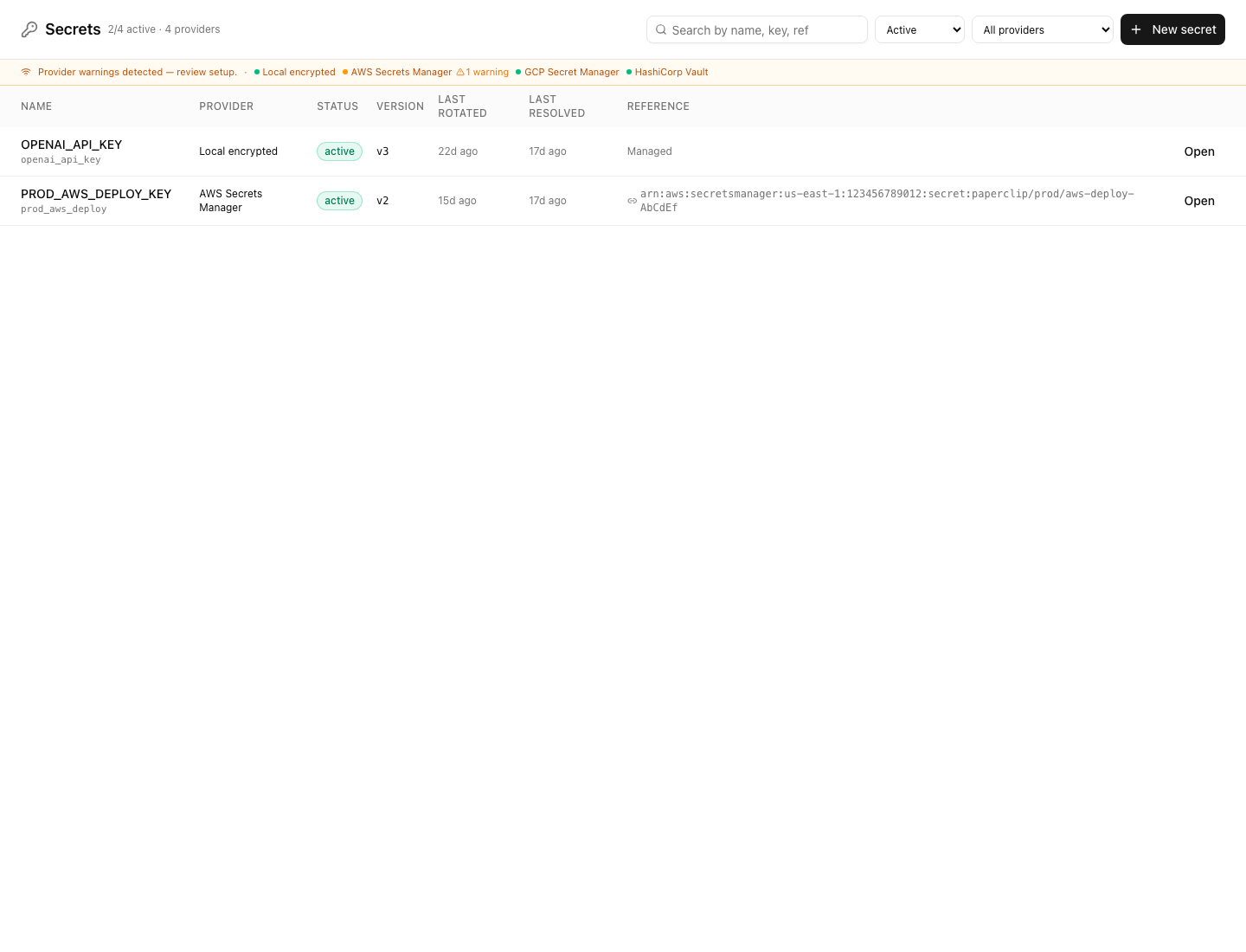
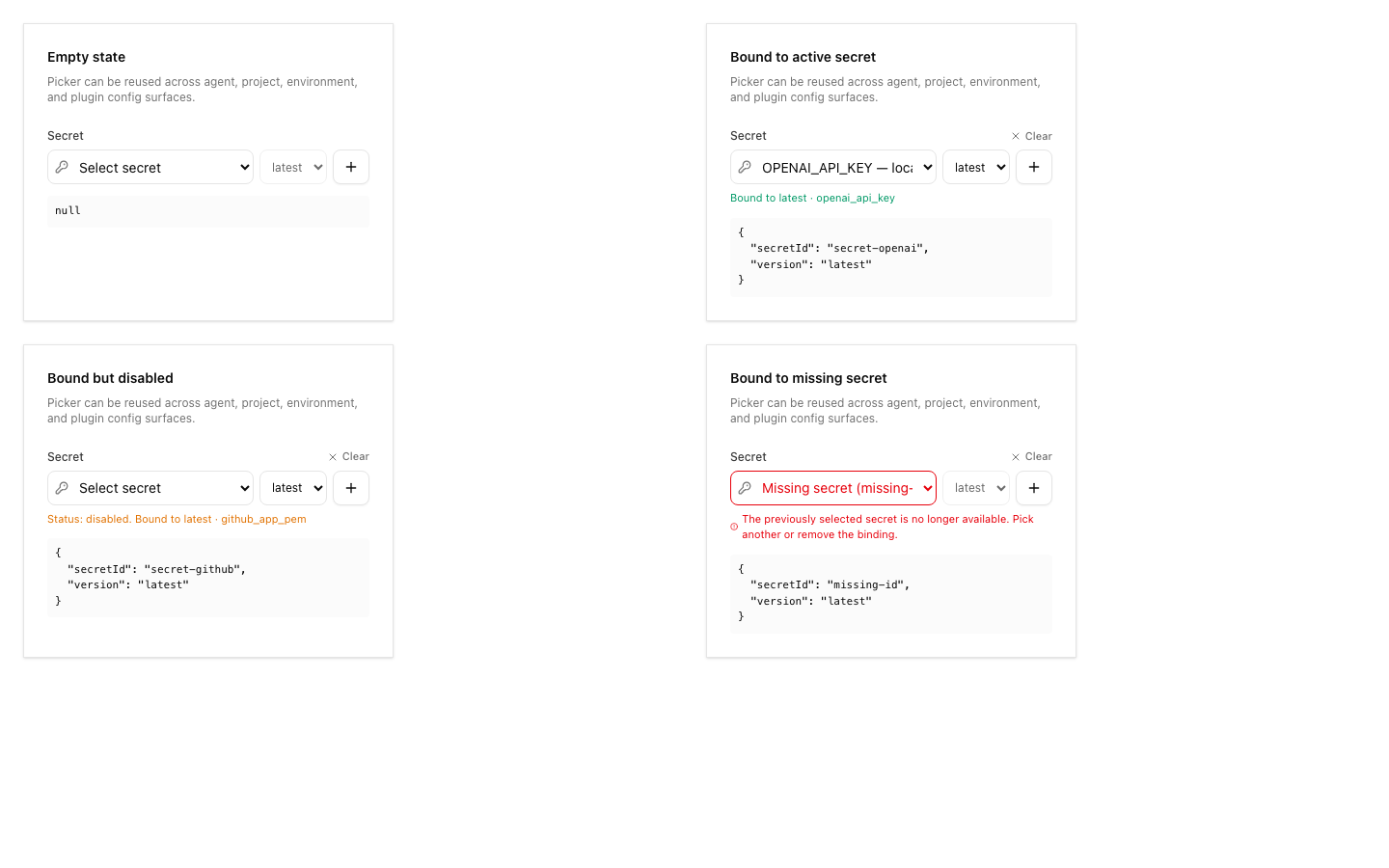
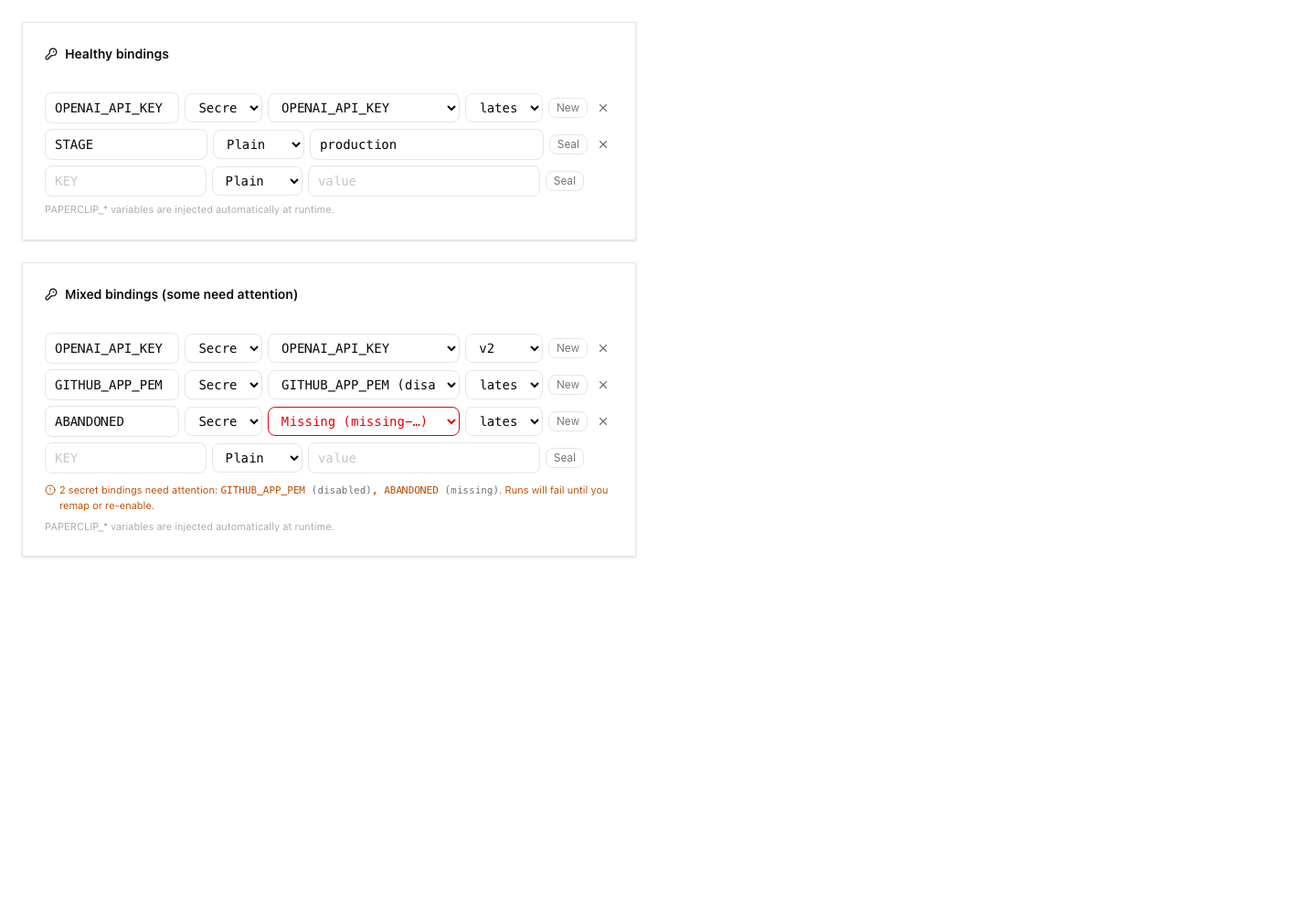
- Added Secrets UI surfaces for vault management and remote import, plus
CLI/API documentation for setup and operations.
- Stabilized routine webhook secret binding paths and SSH
environment-driver fixture bindings discovered during verification.
- Addressed Greptile and CI findings: no lockfile/package drift,
monotonic migration metadata, disabled-vault default races, soft-deleted
secret hiding/recreate behavior, remove behavior with disabled vaults,
soft-deleted external-reference re-import, non-active rotation guards,
managed-secret soft deletion through PATCH, and per-call AWS SDK
credential client churn.
- Rebased this branch onto `public-gh/master` at `0e1a5828` and
force-pushed with lease to keep this as the single PR for the branch.
## Verification
- `git fetch public-gh master`
- `git rebase public-gh/master`
- `git diff --name-only public-gh/master...HEAD | grep
'^pnpm-lock\.yaml$' || true` confirmed `pnpm-lock.yaml` is not in the PR
diff.
- Confirmed migration ordering: master ends at `0081_optimal_dormammu`;
this PR adds `0082_dry_vision` and
`0083_company_secret_provider_configs`.
- Inspected migrations for repeat safety: new tables/indexes use `IF NOT
EXISTS`; foreign keys are guarded by `DO $$ ... IF NOT EXISTS`; column
additions use `ADD COLUMN IF NOT EXISTS`.
- `pnpm -r typecheck` passed before the Greptile follow-up commits.
- `pnpm test:run` ran the full stable Vitest path before the Greptile
follow-up commits; it completed with 3 timing-related failures under
parallel load: `codex-local-execute.test.ts`,
`cursor-local-execute.test.ts`, and `environment-service.test.ts`.
- `pnpm --filter @paperclipai/server exec vitest run
src/__tests__/codex-local-execute.test.ts
src/__tests__/cursor-local-execute.test.ts
src/__tests__/environment-service.test.ts` passed on targeted rerun
(`24/24`).
- `pnpm build` passed before the Greptile follow-up commits. Vite
reported existing chunk-size/dynamic-import warnings.
- After Greptile follow-up commits: `pnpm --filter @paperclipai/server
exec vitest run src/__tests__/secrets-service.test.ts` passed (`26/26`).
- After Greptile follow-up commits: `pnpm --filter @paperclipai/server
exec vitest run src/__tests__/aws-secrets-manager-provider.test.ts
src/__tests__/secrets-service.test.ts` passed (`39/39`).
- After Greptile follow-up commits: `pnpm --filter @paperclipai/server
typecheck` passed.
- Captured Storybook screenshots from `ui/storybook-static` for visual
review.
- Latest PR checks on `5ca3a5cf`: `policy`, serialized server suites
1/4-4/4, `Canary Dry Run`, `e2e`, `security/snyk`, and `Greptile Review`
pass; aggregate `verify` is still registering the completed child
checks.
- Greptile review loop continued through the latest requested pass; all
Greptile review threads are resolved and the latest `Greptile Review`
check on `5ca3a5cf` passed with 0 comments added.
## Screenshots
Before: the provider-vault and remote-import surfaces did not exist on
`master`; these are after-state screenshots from the Storybook fixtures.
## Risks
- Migration risk: this adds new secret provider tables and extends
existing secret rows. The migrations were checked for monotonic ordering
and idempotent guards, but reviewers should still inspect upgrade
behavior carefully.
- Provider risk: AWS support uses direct SigV4 requests. Automated tests
cover signing, request timeouts, vault-config selection, namespace
guardrails, pending-version archival, sanitized provider errors, and
service-level cleanup paths. A real-vault AWS smoke test remains
deployment validation for an operator with AWS credentials rather than
an unverified merge blocker in this local branch.
- UI risk: the Secrets page and import dialog are large new surfaces;
screenshots are included above for reviewer inspection.
- Verification risk: the full local stable test command hit
parallel-load timing failures, although the exact failed files passed
when rerun directly.
- Operational risk: remote import intentionally avoids plaintext reads;
operators must understand that imported external references resolve at
runtime and may fail if AWS permissions change.
> For core feature work, check [`ROADMAP.md`](ROADMAP.md) first and
discuss it in `#dev` before opening the PR. Feature PRs that overlap
with planned core work may need to be redirected — check the roadmap
first. See `CONTRIBUTING.md`.
## Model Used
- OpenAI Codex, GPT-5 coding agent with local shell/tool use in the
Paperclip worktree. Exact context-window size was not exposed by the
runtime.
## Checklist
- [x] I have included a thinking path that traces from project context
to this change
- [x] I have specified the model used (with version and capability
details)
- [x] I have checked ROADMAP.md and confirmed this PR does not duplicate
planned core work
- [ ] I have run tests locally and they pass
- [x] I have added or updated tests where applicable
- [x] If this change affects the UI, I have included before/after
screenshots
- [x] I have updated relevant documentation to reflect my changes
- [x] I have considered and documented any risks above
- [x] I will address all Greptile and reviewer comments before
requesting merge
---------
Co-authored-by: Paperclip <noreply@paperclip.ing>
Co-authored-by: Claude Sonnet 4.6 <noreply@anthropic.com>



1155 lines
38 KiB
TypeScript
1155 lines
38 KiB
TypeScript
import path from "node:path";
|
|
import type { SshRemoteExecutionSpec } from "./ssh.js";
|
|
import {
|
|
prepareCommandManagedRuntime,
|
|
type CommandManagedRuntimeRunner,
|
|
} from "./command-managed-runtime.js";
|
|
import {
|
|
buildRemoteExecutionSessionIdentity,
|
|
prepareRemoteManagedRuntime,
|
|
remoteExecutionSessionMatches,
|
|
type RemoteManagedRuntimeAsset,
|
|
} from "./remote-managed-runtime.js";
|
|
import {
|
|
createCommandManagedSandboxCallbackBridgeQueueClient,
|
|
createSandboxCallbackBridgeAsset,
|
|
createSandboxCallbackBridgeToken,
|
|
DEFAULT_SANDBOX_CALLBACK_BRIDGE_MAX_BODY_BYTES,
|
|
startSandboxCallbackBridgeServer,
|
|
startSandboxCallbackBridgeWorker,
|
|
} from "./sandbox-callback-bridge.js";
|
|
import { createSshCommandManagedRuntimeRunner, parseSshRemoteExecutionSpec, runSshCommand, shellQuote } from "./ssh.js";
|
|
import {
|
|
ensureCommandResolvable,
|
|
resolveCommandForLogs,
|
|
runChildProcess,
|
|
type RunProcessResult,
|
|
type TerminalResultCleanupOptions,
|
|
} from "./server-utils.js";
|
|
import { sanitizeRemoteExecutionEnv } from "./remote-execution-env.js";
|
|
import { preferredShellForSandbox, shellCommandArgs } from "./sandbox-shell.js";
|
|
|
|
export interface AdapterLocalExecutionTarget {
|
|
kind: "local";
|
|
environmentId?: string | null;
|
|
leaseId?: string | null;
|
|
}
|
|
|
|
export interface AdapterSshExecutionTarget {
|
|
kind: "remote";
|
|
transport: "ssh";
|
|
environmentId?: string | null;
|
|
leaseId?: string | null;
|
|
remoteCwd: string;
|
|
spec: SshRemoteExecutionSpec;
|
|
}
|
|
|
|
export interface AdapterSandboxExecutionTarget {
|
|
kind: "remote";
|
|
transport: "sandbox";
|
|
providerKey?: string | null;
|
|
shellCommand?: "bash" | "sh" | null;
|
|
environmentId?: string | null;
|
|
leaseId?: string | null;
|
|
remoteCwd: string;
|
|
timeoutMs?: number | null;
|
|
runner?: CommandManagedRuntimeRunner;
|
|
}
|
|
|
|
export type AdapterExecutionTarget =
|
|
| AdapterLocalExecutionTarget
|
|
| AdapterSshExecutionTarget
|
|
| AdapterSandboxExecutionTarget;
|
|
|
|
export type AdapterRemoteExecutionSpec = SshRemoteExecutionSpec;
|
|
|
|
export type AdapterManagedRuntimeAsset = RemoteManagedRuntimeAsset;
|
|
|
|
export interface PreparedAdapterExecutionTargetRuntime {
|
|
target: AdapterExecutionTarget;
|
|
workspaceRemoteDir: string | null;
|
|
runtimeRootDir: string | null;
|
|
assetDirs: Record<string, string>;
|
|
restoreWorkspace(): Promise<void>;
|
|
}
|
|
|
|
export interface AdapterExecutionTargetProcessOptions {
|
|
cwd: string;
|
|
env: Record<string, string>;
|
|
stdin?: string;
|
|
timeoutSec: number;
|
|
graceSec: number;
|
|
onLog: (stream: "stdout" | "stderr", chunk: string) => Promise<void>;
|
|
onSpawn?: (meta: { pid: number; processGroupId: number | null; startedAt: string }) => Promise<void>;
|
|
terminalResultCleanup?: TerminalResultCleanupOptions;
|
|
}
|
|
|
|
export interface AdapterExecutionTargetShellOptions {
|
|
cwd: string;
|
|
env: Record<string, string>;
|
|
timeoutSec?: number;
|
|
graceSec?: number;
|
|
onLog?: (stream: "stdout" | "stderr", chunk: string) => Promise<void>;
|
|
}
|
|
|
|
export interface AdapterExecutionTargetPaperclipBridgeHandle {
|
|
env: Record<string, string>;
|
|
stop(): Promise<void>;
|
|
}
|
|
|
|
export { sanitizeRemoteExecutionEnv } from "./remote-execution-env.js";
|
|
|
|
function parseObject(value: unknown): Record<string, unknown> {
|
|
return value && typeof value === "object" && !Array.isArray(value)
|
|
? (value as Record<string, unknown>)
|
|
: {};
|
|
}
|
|
|
|
function readString(value: unknown): string | null {
|
|
return typeof value === "string" && value.trim().length > 0 ? value.trim() : null;
|
|
}
|
|
|
|
function readStringMeta(parsed: Record<string, unknown>, key: string): string | null {
|
|
return readString(parsed[key]);
|
|
}
|
|
|
|
function resolveHostForUrl(rawHost: string): string {
|
|
const host = rawHost.trim();
|
|
if (!host || host === "0.0.0.0" || host === "::") return "localhost";
|
|
if (host.includes(":") && !host.startsWith("[") && !host.endsWith("]")) return `[${host}]`;
|
|
return host;
|
|
}
|
|
|
|
function resolveDefaultPaperclipApiUrl(): string {
|
|
const runtimeHost = resolveHostForUrl(
|
|
process.env.PAPERCLIP_LISTEN_HOST ?? process.env.HOST ?? "localhost",
|
|
);
|
|
// 3100 matches the default Paperclip dev server port when the runtime does not provide one.
|
|
const runtimePort = process.env.PAPERCLIP_LISTEN_PORT ?? process.env.PORT ?? "3100";
|
|
return `http://${runtimeHost}:${runtimePort}`;
|
|
}
|
|
|
|
function isBridgeDebugEnabled(env: NodeJS.ProcessEnv): boolean {
|
|
const value = env.PAPERCLIP_BRIDGE_DEBUG?.trim().toLowerCase();
|
|
return value === "1" || value === "true" || value === "yes";
|
|
}
|
|
|
|
function isAdapterExecutionTargetInstance(value: unknown): value is AdapterExecutionTarget {
|
|
const parsed = parseObject(value);
|
|
if (parsed.kind === "local") return true;
|
|
if (parsed.kind !== "remote") return false;
|
|
if (parsed.transport === "ssh") return parseSshRemoteExecutionSpec(parseObject(parsed.spec)) !== null;
|
|
if (parsed.transport !== "sandbox") return false;
|
|
return readStringMeta(parsed, "remoteCwd") !== null;
|
|
}
|
|
|
|
export function adapterExecutionTargetToRemoteSpec(
|
|
target: AdapterExecutionTarget | null | undefined,
|
|
): AdapterRemoteExecutionSpec | null {
|
|
return target?.kind === "remote" && target.transport === "ssh" ? target.spec : null;
|
|
}
|
|
|
|
export function adapterExecutionTargetIsRemote(
|
|
target: AdapterExecutionTarget | null | undefined,
|
|
): boolean {
|
|
return target?.kind === "remote";
|
|
}
|
|
|
|
export function adapterExecutionTargetUsesManagedHome(
|
|
target: AdapterExecutionTarget | null | undefined,
|
|
): boolean {
|
|
return target?.kind === "remote" && target.transport === "sandbox";
|
|
}
|
|
|
|
export function adapterExecutionTargetRemoteCwd(
|
|
target: AdapterExecutionTarget | null | undefined,
|
|
localCwd: string,
|
|
): string {
|
|
return target?.kind === "remote" ? target.remoteCwd : localCwd;
|
|
}
|
|
|
|
export function overrideAdapterExecutionTargetRemoteCwd(
|
|
target: AdapterExecutionTarget | null | undefined,
|
|
remoteCwd: string | null | undefined,
|
|
): AdapterExecutionTarget | null | undefined {
|
|
const nextRemoteCwd = remoteCwd?.trim();
|
|
if (!target || target.kind !== "remote" || !nextRemoteCwd) {
|
|
return target;
|
|
}
|
|
if (target.remoteCwd === nextRemoteCwd) {
|
|
return target;
|
|
}
|
|
if (target.transport === "ssh") {
|
|
return {
|
|
...target,
|
|
remoteCwd: nextRemoteCwd,
|
|
spec: {
|
|
...target.spec,
|
|
remoteCwd: nextRemoteCwd,
|
|
},
|
|
};
|
|
}
|
|
return {
|
|
...target,
|
|
remoteCwd: nextRemoteCwd,
|
|
};
|
|
}
|
|
|
|
export function resolveAdapterExecutionTargetCwd(
|
|
target: AdapterExecutionTarget | null | undefined,
|
|
configuredCwd: string | null | undefined,
|
|
localFallbackCwd: string,
|
|
): string {
|
|
if (typeof configuredCwd === "string" && configuredCwd.trim().length > 0) {
|
|
return configuredCwd;
|
|
}
|
|
return adapterExecutionTargetRemoteCwd(target, localFallbackCwd);
|
|
}
|
|
|
|
export function adapterExecutionTargetUsesPaperclipBridge(
|
|
target: AdapterExecutionTarget | null | undefined,
|
|
): boolean {
|
|
return target?.kind === "remote";
|
|
}
|
|
|
|
export function describeAdapterExecutionTarget(
|
|
target: AdapterExecutionTarget | null | undefined,
|
|
): string {
|
|
if (!target || target.kind === "local") return "local environment";
|
|
if (target.transport === "ssh") {
|
|
return `SSH environment ${target.spec.username}@${target.spec.host}:${target.spec.port}`;
|
|
}
|
|
return `sandbox environment${target.providerKey ? ` (${target.providerKey})` : ""}`;
|
|
}
|
|
|
|
function requireSandboxRunner(target: AdapterSandboxExecutionTarget): CommandManagedRuntimeRunner {
|
|
if (target.runner) return target.runner;
|
|
throw new Error(
|
|
"Sandbox execution target is missing its provider runtime runner. Sandbox commands must execute through the environment runtime.",
|
|
);
|
|
}
|
|
|
|
function preferredSandboxShell(target: AdapterSandboxExecutionTarget): "bash" | "sh" {
|
|
return preferredShellForSandbox(target.shellCommand);
|
|
}
|
|
|
|
type AdapterCommandCapableExecutionTarget = AdapterSshExecutionTarget | AdapterSandboxExecutionTarget;
|
|
|
|
function adapterExecutionTargetCommandRunner(target: AdapterCommandCapableExecutionTarget): CommandManagedRuntimeRunner {
|
|
if (target.transport === "ssh") {
|
|
return createSshCommandManagedRuntimeRunner({
|
|
spec: target.spec,
|
|
defaultCwd: target.remoteCwd,
|
|
maxBufferBytes: DEFAULT_SANDBOX_CALLBACK_BRIDGE_MAX_BODY_BYTES * 4,
|
|
});
|
|
}
|
|
return requireSandboxRunner(target);
|
|
}
|
|
|
|
function adapterExecutionTargetShellCommand(target: AdapterCommandCapableExecutionTarget): "bash" | "sh" {
|
|
return target.transport === "ssh" ? "sh" : preferredSandboxShell(target);
|
|
}
|
|
|
|
function adapterExecutionTargetTimeoutMs(
|
|
target: AdapterCommandCapableExecutionTarget,
|
|
): number | null | undefined {
|
|
return target.transport === "sandbox" ? target.timeoutMs : undefined;
|
|
}
|
|
|
|
export async function ensureAdapterExecutionTargetCommandResolvable(
|
|
command: string,
|
|
target: AdapterExecutionTarget | null | undefined,
|
|
cwd: string,
|
|
env: NodeJS.ProcessEnv,
|
|
options: { installCommand?: string | null } = {},
|
|
) {
|
|
if (target?.kind === "remote" && target.transport === "sandbox") {
|
|
await ensureSandboxCommandResolvable(command, target, options.installCommand?.trim() || null);
|
|
return;
|
|
}
|
|
await ensureCommandResolvable(command, cwd, env, {
|
|
remoteExecution: adapterExecutionTargetToRemoteSpec(target),
|
|
});
|
|
}
|
|
|
|
async function probeSandboxCommandResolvable(
|
|
command: string,
|
|
target: AdapterSandboxExecutionTarget,
|
|
): Promise<{ resolved: boolean; timedOut: boolean; stderr: string }> {
|
|
const runner = requireSandboxRunner(target);
|
|
const probeScript = `command -v ${shellQuote(command)}`;
|
|
const result = await runner.execute({
|
|
command: "sh",
|
|
args: ["-c", probeScript],
|
|
cwd: target.remoteCwd,
|
|
timeoutMs: target.timeoutMs ?? 15_000,
|
|
});
|
|
return {
|
|
resolved: !result.timedOut && (result.exitCode ?? 1) === 0,
|
|
timedOut: result.timedOut,
|
|
stderr: result.stderr.trim(),
|
|
};
|
|
}
|
|
|
|
async function ensureSandboxCommandResolvable(
|
|
command: string,
|
|
target: AdapterSandboxExecutionTarget,
|
|
installCommand: string | null,
|
|
): Promise<void> {
|
|
// Probe whether the binary is resolvable inside the sandbox. We previously
|
|
// short-circuited this for sandbox targets, which let the caller report a
|
|
// success message even when the CLI was missing from the image. Now we run
|
|
// a real `command -v` through the same runner the hello probe will use, so
|
|
// the first step honestly reflects whether the binary is on PATH. The
|
|
// sandbox provider is responsible for sourcing login profiles (e2b mirrors
|
|
// SSH's buildSshSpawnTarget) so this and the hello probe agree on PATH.
|
|
let probe = await probeSandboxCommandResolvable(command, target);
|
|
if (probe.resolved) return;
|
|
if (probe.timedOut) {
|
|
throw new Error(`Timed out checking command "${command}" on sandbox target.`);
|
|
}
|
|
|
|
// If the caller supplied an install command, attempt the install once via
|
|
// the sandbox runner (which the sandbox provider wraps in a login shell)
|
|
// and re-probe before reporting failure. This lets fresh sandbox leases
|
|
// bring up the CLI before the resolvability gate, mirroring the test path.
|
|
let installFailureDetail: string | null = null;
|
|
if (installCommand) {
|
|
const runner = requireSandboxRunner(target);
|
|
try {
|
|
const installResult = await runner.execute({
|
|
command: "sh",
|
|
args: shellCommandArgs(installCommand),
|
|
cwd: target.remoteCwd,
|
|
timeoutMs: target.timeoutMs ?? 300_000,
|
|
});
|
|
if (installResult.timedOut) {
|
|
installFailureDetail = `install command timed out: ${installCommand}`;
|
|
} else if ((installResult.exitCode ?? 0) !== 0) {
|
|
const tail = (text: string) =>
|
|
text.split(/\r?\n/).filter((line) => line.trim().length > 0).slice(-2).join(" | ").slice(0, 240);
|
|
const reason = tail(installResult.stderr || installResult.stdout) || `exit ${installResult.exitCode ?? "?"}`;
|
|
installFailureDetail = `install command exited ${installResult.exitCode ?? "?"}: ${reason}`;
|
|
}
|
|
} catch (err) {
|
|
installFailureDetail = `install command threw: ${err instanceof Error ? err.message : String(err)}`;
|
|
}
|
|
probe = await probeSandboxCommandResolvable(command, target);
|
|
if (probe.resolved) return;
|
|
if (probe.timedOut) {
|
|
throw new Error(`Timed out checking command "${command}" on sandbox target.`);
|
|
}
|
|
}
|
|
|
|
const probeStderr = probe.stderr.length > 0 ? ` probe stderr: ${probe.stderr}` : "";
|
|
const installDetail = installFailureDetail ? `; ${installFailureDetail}` : "";
|
|
throw new Error(
|
|
`Command "${command}" is not installed or not on PATH in the sandbox environment${installDetail}.${probeStderr}`,
|
|
);
|
|
}
|
|
|
|
export async function resolveAdapterExecutionTargetCommandForLogs(
|
|
command: string,
|
|
target: AdapterExecutionTarget | null | undefined,
|
|
cwd: string,
|
|
env: NodeJS.ProcessEnv,
|
|
): Promise<string> {
|
|
if (target?.kind === "remote" && target.transport === "sandbox") {
|
|
return `sandbox://${target.providerKey ?? "provider"}/${target.leaseId ?? "lease"}/${target.remoteCwd} :: ${command}`;
|
|
}
|
|
return await resolveCommandForLogs(command, cwd, env, {
|
|
remoteExecution: adapterExecutionTargetToRemoteSpec(target),
|
|
});
|
|
}
|
|
|
|
export async function runAdapterExecutionTargetProcess(
|
|
runId: string,
|
|
target: AdapterExecutionTarget | null | undefined,
|
|
command: string,
|
|
args: string[],
|
|
options: AdapterExecutionTargetProcessOptions,
|
|
): Promise<RunProcessResult> {
|
|
if (target?.kind === "remote" && target.transport === "sandbox") {
|
|
const runner = requireSandboxRunner(target);
|
|
const env = sanitizeRemoteExecutionEnv(options.env);
|
|
return await runner.execute({
|
|
command,
|
|
args,
|
|
cwd: target.remoteCwd,
|
|
env,
|
|
stdin: options.stdin,
|
|
timeoutMs: options.timeoutSec > 0 ? options.timeoutSec * 1000 : target.timeoutMs ?? undefined,
|
|
onLog: options.onLog,
|
|
onSpawn: options.onSpawn
|
|
? async (meta) => options.onSpawn?.({ ...meta, processGroupId: null })
|
|
: undefined,
|
|
});
|
|
}
|
|
|
|
const env =
|
|
target?.kind === "remote" && target.transport === "ssh"
|
|
? sanitizeRemoteExecutionEnv(options.env)
|
|
: options.env;
|
|
|
|
return await runChildProcess(runId, command, args, {
|
|
cwd: options.cwd,
|
|
env,
|
|
stdin: options.stdin,
|
|
timeoutSec: options.timeoutSec,
|
|
graceSec: options.graceSec,
|
|
onLog: options.onLog,
|
|
onSpawn: options.onSpawn,
|
|
terminalResultCleanup: options.terminalResultCleanup,
|
|
remoteExecution: adapterExecutionTargetToRemoteSpec(target),
|
|
});
|
|
}
|
|
|
|
export async function runAdapterExecutionTargetShellCommand(
|
|
runId: string,
|
|
target: AdapterExecutionTarget | null | undefined,
|
|
command: string,
|
|
options: AdapterExecutionTargetShellOptions,
|
|
): Promise<RunProcessResult> {
|
|
const onLog = options.onLog ?? (async () => {});
|
|
if (target?.kind === "remote") {
|
|
const startedAt = new Date().toISOString();
|
|
const env = sanitizeRemoteExecutionEnv(options.env);
|
|
if (target.transport === "ssh") {
|
|
try {
|
|
// Pass the raw command — `runSshCommand` owns profile sourcing and
|
|
// the outer shell wrapper. Wrapping again here would nest a second
|
|
// shell after the explicit `env KEY=VAL` overrides, re-sourcing
|
|
// login profiles AFTER the override and silently undoing any
|
|
// identity var (NVM_DIR / PATH / etc.) that a profile re-exports.
|
|
const result = await runSshCommand(target.spec, command, {
|
|
env,
|
|
timeoutMs: (options.timeoutSec ?? 15) * 1000,
|
|
});
|
|
if (result.stdout) await onLog("stdout", result.stdout);
|
|
if (result.stderr) await onLog("stderr", result.stderr);
|
|
return {
|
|
exitCode: 0,
|
|
signal: null,
|
|
timedOut: false,
|
|
stdout: result.stdout,
|
|
stderr: result.stderr,
|
|
pid: null,
|
|
startedAt,
|
|
};
|
|
} catch (error) {
|
|
const timedOutError = error as NodeJS.ErrnoException & {
|
|
stdout?: string;
|
|
stderr?: string;
|
|
signal?: string | null;
|
|
};
|
|
const stdout = timedOutError.stdout ?? "";
|
|
const stderr = timedOutError.stderr ?? "";
|
|
if (typeof timedOutError.code === "number") {
|
|
if (stdout) await onLog("stdout", stdout);
|
|
if (stderr) await onLog("stderr", stderr);
|
|
return {
|
|
exitCode: timedOutError.code,
|
|
signal: timedOutError.signal ?? null,
|
|
timedOut: false,
|
|
stdout,
|
|
stderr,
|
|
pid: null,
|
|
startedAt,
|
|
};
|
|
}
|
|
if (timedOutError.code !== "ETIMEDOUT") {
|
|
throw error;
|
|
}
|
|
if (stdout) await onLog("stdout", stdout);
|
|
if (stderr) await onLog("stderr", stderr);
|
|
return {
|
|
exitCode: null,
|
|
signal: timedOutError.signal ?? null,
|
|
timedOut: true,
|
|
stdout,
|
|
stderr,
|
|
pid: null,
|
|
startedAt,
|
|
};
|
|
}
|
|
}
|
|
|
|
const shellCommand = preferredSandboxShell(target);
|
|
return await requireSandboxRunner(target).execute({
|
|
command: shellCommand,
|
|
args: shellCommandArgs(command),
|
|
cwd: target.remoteCwd,
|
|
env,
|
|
timeoutMs: (options.timeoutSec ?? 15) * 1000,
|
|
onLog,
|
|
});
|
|
}
|
|
|
|
return await runAdapterExecutionTargetProcess(
|
|
runId,
|
|
target,
|
|
"sh",
|
|
["-lc", command],
|
|
{
|
|
cwd: options.cwd,
|
|
env: options.env,
|
|
timeoutSec: options.timeoutSec ?? 15,
|
|
graceSec: options.graceSec ?? 5,
|
|
onLog,
|
|
},
|
|
);
|
|
}
|
|
|
|
export interface AdapterSandboxInstallCommandCheck {
|
|
code: string;
|
|
level: "info" | "warn" | "error";
|
|
message: string;
|
|
detail?: string;
|
|
hint?: string;
|
|
}
|
|
|
|
// Best-effort run of an adapter-supplied install command on a sandbox target
|
|
// before the resolvability + hello probe. Returns null for non-sandbox
|
|
// targets so callers can no-op. Returns a structured check otherwise — never
|
|
// throws — so the rest of the test still runs and reports the post-install
|
|
// state honestly. Caller pushes the check into its result array; the test
|
|
// report shows whether install was attempted and what came back.
|
|
export async function maybeRunSandboxInstallCommand(input: {
|
|
runId: string;
|
|
target: AdapterExecutionTarget | null | undefined;
|
|
adapterKey: string;
|
|
installCommand: string;
|
|
/** When provided, skip the install if `command -v <detectCommand>` succeeds. */
|
|
detectCommand?: string | null;
|
|
env?: Record<string, string>;
|
|
timeoutSec?: number;
|
|
}): Promise<AdapterSandboxInstallCommandCheck | null> {
|
|
const { target, adapterKey, installCommand } = input;
|
|
if (!target || target.kind !== "remote" || target.transport !== "sandbox") {
|
|
return null;
|
|
}
|
|
const trimmed = installCommand.trim();
|
|
if (trimmed.length === 0) return null;
|
|
|
|
const code = `${adapterKey}_install_command_run`;
|
|
|
|
// Skip install when the binary is already on PATH. Avoids running
|
|
// network-dependent installers (e.g. `curl ... | bash`) on every test
|
|
// probe when the CLI is preinstalled on the lease/template.
|
|
const detectCommand = input.detectCommand?.trim();
|
|
if (detectCommand) {
|
|
try {
|
|
const probe = await runAdapterExecutionTargetShellCommand(
|
|
input.runId,
|
|
target,
|
|
`command -v ${shellQuote(detectCommand)} >/dev/null 2>&1`,
|
|
{
|
|
cwd: target.remoteCwd,
|
|
env: input.env ?? {},
|
|
timeoutSec: 30,
|
|
graceSec: 5,
|
|
},
|
|
);
|
|
if (!probe.timedOut && probe.exitCode === 0) {
|
|
return {
|
|
code,
|
|
level: "info",
|
|
message: `${detectCommand} already on PATH; skipped install.`,
|
|
};
|
|
}
|
|
} catch {
|
|
// Fall through to actually running the install — failure to probe
|
|
// is not a reason to skip the install gate.
|
|
}
|
|
}
|
|
|
|
let result;
|
|
try {
|
|
result = await runAdapterExecutionTargetShellCommand(input.runId, target, trimmed, {
|
|
cwd: target.remoteCwd,
|
|
env: input.env ?? {},
|
|
timeoutSec: input.timeoutSec ?? 240,
|
|
graceSec: 10,
|
|
});
|
|
} catch (err) {
|
|
return {
|
|
code,
|
|
level: "warn",
|
|
message: "Install command threw before completion.",
|
|
detail: err instanceof Error ? err.message : String(err),
|
|
};
|
|
}
|
|
const tail = (text: string) =>
|
|
text.split(/\r?\n/).filter((line) => line.trim().length > 0).slice(-3).join(" | ").slice(0, 480);
|
|
if (result.timedOut) {
|
|
return {
|
|
code,
|
|
level: "warn",
|
|
message: `Install command timed out: ${trimmed}`,
|
|
detail: tail(result.stderr || result.stdout),
|
|
};
|
|
}
|
|
if ((result.exitCode ?? 1) === 0) {
|
|
return {
|
|
code,
|
|
level: "info",
|
|
message: `Install command ran: ${trimmed}`,
|
|
...(tail(result.stdout) ? { detail: tail(result.stdout) } : {}),
|
|
};
|
|
}
|
|
return {
|
|
code,
|
|
level: "warn",
|
|
message: `Install command exited ${result.exitCode}: ${trimmed}`,
|
|
detail: tail(result.stderr || result.stdout),
|
|
};
|
|
}
|
|
|
|
export async function readAdapterExecutionTargetHomeDir(
|
|
runId: string,
|
|
target: AdapterExecutionTarget | null | undefined,
|
|
options: AdapterExecutionTargetShellOptions,
|
|
): Promise<string | null> {
|
|
const result = await runAdapterExecutionTargetShellCommand(
|
|
runId,
|
|
target,
|
|
'printf %s "$HOME"',
|
|
options,
|
|
);
|
|
const homeDir = result.stdout.trim();
|
|
return homeDir.length > 0 ? homeDir : null;
|
|
}
|
|
|
|
export async function ensureAdapterExecutionTargetRuntimeCommandInstalled(input: {
|
|
runId: string;
|
|
target: AdapterExecutionTarget | null | undefined;
|
|
installCommand?: string | null;
|
|
detectCommand?: string | null;
|
|
cwd: string;
|
|
env: Record<string, string>;
|
|
timeoutSec?: number;
|
|
graceSec?: number;
|
|
onLog?: AdapterExecutionTargetShellOptions["onLog"];
|
|
}): Promise<void> {
|
|
const installCommand = input.installCommand?.trim();
|
|
if (!installCommand || input.target?.kind !== "remote" || input.target.transport !== "sandbox") {
|
|
return;
|
|
}
|
|
|
|
const detectCommand = input.detectCommand?.trim();
|
|
if (detectCommand) {
|
|
const probe = await runAdapterExecutionTargetShellCommand(
|
|
input.runId,
|
|
input.target,
|
|
`command -v ${shellQuote(detectCommand)} >/dev/null 2>&1`,
|
|
{
|
|
cwd: input.cwd,
|
|
env: input.env,
|
|
timeoutSec: input.timeoutSec,
|
|
graceSec: input.graceSec,
|
|
},
|
|
);
|
|
if (!probe.timedOut && probe.exitCode === 0) {
|
|
return;
|
|
}
|
|
}
|
|
|
|
const result = await runAdapterExecutionTargetShellCommand(
|
|
input.runId,
|
|
input.target,
|
|
installCommand,
|
|
{
|
|
cwd: input.cwd,
|
|
env: input.env,
|
|
timeoutSec: input.timeoutSec,
|
|
graceSec: input.graceSec,
|
|
onLog: input.onLog,
|
|
},
|
|
);
|
|
|
|
// A failed or timed-out install is not necessarily fatal: the CLI may already
|
|
// be on PATH from a previous lease's install, the template image, or another
|
|
// path entry. Re-run the detect probe (when one is configured) so a transient
|
|
// install failure does not abort the agent run when the binary is reachable.
|
|
const installFailed = result.timedOut || (result.exitCode ?? 0) !== 0;
|
|
if (!installFailed) {
|
|
return;
|
|
}
|
|
if (detectCommand) {
|
|
const recheck = await runAdapterExecutionTargetShellCommand(
|
|
input.runId,
|
|
input.target,
|
|
`command -v ${shellQuote(detectCommand)} >/dev/null 2>&1`,
|
|
{
|
|
cwd: input.cwd,
|
|
env: input.env,
|
|
timeoutSec: input.timeoutSec,
|
|
graceSec: input.graceSec,
|
|
},
|
|
);
|
|
if (!recheck.timedOut && recheck.exitCode === 0) {
|
|
if (input.onLog) {
|
|
const reason = result.timedOut ? "timed out" : `exited ${result.exitCode ?? "?"}`;
|
|
await input.onLog(
|
|
"stderr",
|
|
`[paperclip] Install command ${reason} (${installCommand}) but ${detectCommand} is on PATH; continuing.\n`,
|
|
);
|
|
}
|
|
return;
|
|
}
|
|
}
|
|
|
|
if (result.timedOut) {
|
|
throw new Error(`Timed out while installing the adapter runtime command via: ${installCommand}`);
|
|
}
|
|
throw new Error(`Failed to install the adapter runtime command via: ${installCommand}`);
|
|
}
|
|
|
|
export async function ensureAdapterExecutionTargetFile(
|
|
runId: string,
|
|
target: AdapterExecutionTarget | null | undefined,
|
|
filePath: string,
|
|
options: AdapterExecutionTargetShellOptions,
|
|
): Promise<void> {
|
|
await runAdapterExecutionTargetShellCommand(
|
|
runId,
|
|
target,
|
|
`mkdir -p ${shellQuote(path.posix.dirname(filePath))} && : > ${shellQuote(filePath)}`,
|
|
options,
|
|
);
|
|
}
|
|
|
|
/**
|
|
* Ensure a working directory exists (and is a directory) on the execution target.
|
|
*
|
|
* For local targets this delegates to the local `ensureAbsoluteDirectory` helper
|
|
* (Node fs). For remote (SSH/sandbox) targets it shells out and runs
|
|
* `mkdir -p` (when allowed) followed by a `[ -d ]` check so the result reflects
|
|
* the directory state inside the environment, not on the Paperclip host.
|
|
*
|
|
* Throws an Error with a human-readable message on failure.
|
|
*/
|
|
export async function ensureAdapterExecutionTargetDirectory(
|
|
runId: string,
|
|
target: AdapterExecutionTarget | null | undefined,
|
|
cwd: string,
|
|
options: AdapterExecutionTargetShellOptions & { createIfMissing?: boolean },
|
|
): Promise<void> {
|
|
const createIfMissing = options.createIfMissing ?? false;
|
|
|
|
if (!target || target.kind === "local") {
|
|
const { ensureAbsoluteDirectory } = await import("./server-utils.js");
|
|
await ensureAbsoluteDirectory(cwd, { createIfMissing });
|
|
return;
|
|
}
|
|
|
|
// Remote (SSH or sandbox): both expect POSIX absolute paths inside the env.
|
|
if (!cwd.startsWith("/")) {
|
|
throw new Error(`Working directory must be an absolute POSIX path on the remote target: "${cwd}"`);
|
|
}
|
|
|
|
const quoted = shellQuote(cwd);
|
|
const script = createIfMissing
|
|
? `mkdir -p ${quoted} && [ -d ${quoted} ]`
|
|
: `[ -d ${quoted} ]`;
|
|
|
|
const result = await runAdapterExecutionTargetShellCommand(runId, target, script, {
|
|
cwd: target.kind === "remote" ? target.remoteCwd : cwd,
|
|
env: options.env,
|
|
timeoutSec: options.timeoutSec ?? 15,
|
|
graceSec: options.graceSec ?? 5,
|
|
onLog: options.onLog,
|
|
});
|
|
|
|
if (result.timedOut) {
|
|
throw new Error(`Timed out checking working directory on remote target: "${cwd}"`);
|
|
}
|
|
if ((result.exitCode ?? 1) !== 0) {
|
|
const detail = (result.stderr || result.stdout || "").trim();
|
|
if (createIfMissing) {
|
|
throw new Error(
|
|
`Could not create working directory "${cwd}" on remote target${detail ? `: ${detail}` : "."}`,
|
|
);
|
|
}
|
|
throw new Error(
|
|
`Working directory does not exist on remote target: "${cwd}"${detail ? ` (${detail})` : ""}`,
|
|
);
|
|
}
|
|
}
|
|
|
|
export function adapterExecutionTargetSessionIdentity(
|
|
target: AdapterExecutionTarget | null | undefined,
|
|
): Record<string, unknown> | null {
|
|
if (!target || target.kind === "local") return null;
|
|
if (target.transport === "ssh") return buildRemoteExecutionSessionIdentity(target.spec);
|
|
return {
|
|
transport: "sandbox",
|
|
providerKey: target.providerKey ?? null,
|
|
environmentId: target.environmentId ?? null,
|
|
leaseId: target.leaseId ?? null,
|
|
remoteCwd: target.remoteCwd,
|
|
};
|
|
}
|
|
|
|
export function adapterExecutionTargetSessionMatches(
|
|
saved: unknown,
|
|
target: AdapterExecutionTarget | null | undefined,
|
|
): boolean {
|
|
if (!target || target.kind === "local") {
|
|
return Object.keys(parseObject(saved)).length === 0;
|
|
}
|
|
if (target.transport === "ssh") return remoteExecutionSessionMatches(saved, target.spec);
|
|
const current = adapterExecutionTargetSessionIdentity(target);
|
|
const parsedSaved = parseObject(saved);
|
|
return (
|
|
readStringMeta(parsedSaved, "transport") === current?.transport &&
|
|
readStringMeta(parsedSaved, "providerKey") === current?.providerKey &&
|
|
readStringMeta(parsedSaved, "environmentId") === current?.environmentId &&
|
|
readStringMeta(parsedSaved, "leaseId") === current?.leaseId &&
|
|
readStringMeta(parsedSaved, "remoteCwd") === current?.remoteCwd
|
|
);
|
|
}
|
|
|
|
export function parseAdapterExecutionTarget(value: unknown): AdapterExecutionTarget | null {
|
|
const parsed = parseObject(value);
|
|
const kind = readStringMeta(parsed, "kind");
|
|
|
|
if (kind === "local") {
|
|
return {
|
|
kind: "local",
|
|
environmentId: readStringMeta(parsed, "environmentId"),
|
|
leaseId: readStringMeta(parsed, "leaseId"),
|
|
};
|
|
}
|
|
|
|
if (kind === "remote" && readStringMeta(parsed, "transport") === "ssh") {
|
|
const spec = parseSshRemoteExecutionSpec(parseObject(parsed.spec));
|
|
if (!spec) return null;
|
|
return {
|
|
kind: "remote",
|
|
transport: "ssh",
|
|
environmentId: readStringMeta(parsed, "environmentId"),
|
|
leaseId: readStringMeta(parsed, "leaseId"),
|
|
remoteCwd: spec.remoteCwd,
|
|
spec,
|
|
};
|
|
}
|
|
|
|
if (kind === "remote" && readStringMeta(parsed, "transport") === "sandbox") {
|
|
const remoteCwd = readStringMeta(parsed, "remoteCwd");
|
|
if (!remoteCwd) return null;
|
|
return {
|
|
kind: "remote",
|
|
transport: "sandbox",
|
|
providerKey: readStringMeta(parsed, "providerKey"),
|
|
environmentId: readStringMeta(parsed, "environmentId"),
|
|
leaseId: readStringMeta(parsed, "leaseId"),
|
|
remoteCwd,
|
|
timeoutMs: typeof parsed.timeoutMs === "number" ? parsed.timeoutMs : null,
|
|
};
|
|
}
|
|
|
|
return null;
|
|
}
|
|
|
|
export function adapterExecutionTargetFromRemoteExecution(
|
|
remoteExecution: unknown,
|
|
metadata: Pick<AdapterLocalExecutionTarget, "environmentId" | "leaseId"> = {},
|
|
): AdapterExecutionTarget | null {
|
|
const parsed = parseObject(remoteExecution);
|
|
const ssh = parseSshRemoteExecutionSpec(parsed);
|
|
if (ssh) {
|
|
return {
|
|
kind: "remote",
|
|
transport: "ssh",
|
|
environmentId: metadata.environmentId ?? null,
|
|
leaseId: metadata.leaseId ?? null,
|
|
remoteCwd: ssh.remoteCwd,
|
|
spec: ssh,
|
|
};
|
|
}
|
|
|
|
return null;
|
|
}
|
|
|
|
export function readAdapterExecutionTarget(input: {
|
|
executionTarget?: unknown;
|
|
legacyRemoteExecution?: unknown;
|
|
}): AdapterExecutionTarget | null {
|
|
if (isAdapterExecutionTargetInstance(input.executionTarget)) {
|
|
return input.executionTarget;
|
|
}
|
|
return (
|
|
parseAdapterExecutionTarget(input.executionTarget) ??
|
|
adapterExecutionTargetFromRemoteExecution(input.legacyRemoteExecution)
|
|
);
|
|
}
|
|
|
|
export async function prepareAdapterExecutionTargetRuntime(input: {
|
|
runId: string;
|
|
target: AdapterExecutionTarget | null | undefined;
|
|
adapterKey: string;
|
|
workspaceLocalDir: string;
|
|
workspaceRemoteDir?: string;
|
|
workspaceExclude?: string[];
|
|
preserveAbsentOnRestore?: string[];
|
|
assets?: AdapterManagedRuntimeAsset[];
|
|
installCommand?: string | null;
|
|
/** When provided alongside `installCommand`, skip the install if the binary is already on PATH. */
|
|
detectCommand?: string | null;
|
|
}): Promise<PreparedAdapterExecutionTargetRuntime> {
|
|
const target = input.target ?? { kind: "local" as const };
|
|
if (target.kind === "local") {
|
|
return {
|
|
target,
|
|
workspaceRemoteDir: null,
|
|
runtimeRootDir: null,
|
|
assetDirs: {},
|
|
restoreWorkspace: async () => {},
|
|
};
|
|
}
|
|
|
|
if (target.transport === "ssh") {
|
|
const prepared = await prepareRemoteManagedRuntime({
|
|
spec: target.spec,
|
|
runId: input.runId,
|
|
adapterKey: input.adapterKey,
|
|
workspaceLocalDir: input.workspaceLocalDir,
|
|
workspaceRemoteDir: input.workspaceRemoteDir,
|
|
assets: input.assets,
|
|
});
|
|
return {
|
|
target,
|
|
workspaceRemoteDir: prepared.workspaceRemoteDir,
|
|
runtimeRootDir: prepared.runtimeRootDir,
|
|
assetDirs: prepared.assetDirs,
|
|
restoreWorkspace: prepared.restoreWorkspace,
|
|
};
|
|
}
|
|
|
|
const prepared = await prepareCommandManagedRuntime({
|
|
runner: requireSandboxRunner(target),
|
|
spec: {
|
|
providerKey: target.providerKey,
|
|
shellCommand: target.shellCommand,
|
|
leaseId: target.leaseId,
|
|
remoteCwd: target.remoteCwd,
|
|
timeoutMs: target.timeoutMs,
|
|
},
|
|
adapterKey: input.adapterKey,
|
|
workspaceLocalDir: input.workspaceLocalDir,
|
|
workspaceRemoteDir: input.workspaceRemoteDir,
|
|
workspaceExclude: input.workspaceExclude,
|
|
preserveAbsentOnRestore: input.preserveAbsentOnRestore,
|
|
assets: input.assets,
|
|
installCommand: input.installCommand,
|
|
detectCommand: input.detectCommand,
|
|
});
|
|
return {
|
|
target,
|
|
workspaceRemoteDir: prepared.workspaceRemoteDir,
|
|
runtimeRootDir: prepared.runtimeRootDir,
|
|
assetDirs: prepared.assetDirs,
|
|
restoreWorkspace: prepared.restoreWorkspace,
|
|
};
|
|
}
|
|
|
|
export function runtimeAssetDir(
|
|
prepared: Pick<PreparedAdapterExecutionTargetRuntime, "assetDirs">,
|
|
key: string,
|
|
fallbackRemoteCwd: string,
|
|
): string {
|
|
return prepared.assetDirs[key] ?? path.posix.join(fallbackRemoteCwd, ".paperclip-runtime", key);
|
|
}
|
|
|
|
function buildBridgeResponseHeaders(response: Response): Record<string, string> {
|
|
const out: Record<string, string> = {};
|
|
for (const key of ["content-type", "etag", "last-modified"]) {
|
|
const value = response.headers.get(key);
|
|
if (value && value.trim().length > 0) out[key] = value.trim();
|
|
}
|
|
return out;
|
|
}
|
|
|
|
function buildBridgeForwardUrl(baseUrl: string, request: { path: string; query: string }): URL {
|
|
const url = new URL(request.path, baseUrl);
|
|
const query = request.query.trim();
|
|
url.search = query.startsWith("?") ? query.slice(1) : query;
|
|
return url;
|
|
}
|
|
|
|
function bridgeResponseBodyLimitError(maxBodyBytes: number): Error {
|
|
return new Error(`Bridge response body exceeded the configured size limit of ${maxBodyBytes} bytes.`);
|
|
}
|
|
|
|
async function readBridgeForwardResponseBody(response: Response, maxBodyBytes: number): Promise<string> {
|
|
const rawContentLength = response.headers.get("content-length");
|
|
if (rawContentLength) {
|
|
const contentLength = Number.parseInt(rawContentLength, 10);
|
|
if (Number.isFinite(contentLength) && contentLength > maxBodyBytes) {
|
|
throw bridgeResponseBodyLimitError(maxBodyBytes);
|
|
}
|
|
}
|
|
|
|
if (!response.body) {
|
|
return "";
|
|
}
|
|
|
|
const reader = response.body.getReader();
|
|
const chunks: Buffer[] = [];
|
|
let totalBytes = 0;
|
|
while (true) {
|
|
const { done, value } = await reader.read();
|
|
if (done) break;
|
|
if (!value) continue;
|
|
totalBytes += value.byteLength;
|
|
if (totalBytes > maxBodyBytes) {
|
|
await reader.cancel().catch(() => undefined);
|
|
throw bridgeResponseBodyLimitError(maxBodyBytes);
|
|
}
|
|
chunks.push(Buffer.from(value));
|
|
}
|
|
return Buffer.concat(chunks, totalBytes).toString("utf8");
|
|
}
|
|
|
|
export async function startAdapterExecutionTargetPaperclipBridge(input: {
|
|
runId: string;
|
|
target: AdapterExecutionTarget | null | undefined;
|
|
runtimeRootDir: string | null | undefined;
|
|
adapterKey: string;
|
|
hostApiToken: string | null | undefined;
|
|
hostApiUrl?: string | null;
|
|
onLog?: (stream: "stdout" | "stderr", chunk: string) => Promise<void>;
|
|
maxBodyBytes?: number | null;
|
|
}): Promise<AdapterExecutionTargetPaperclipBridgeHandle | null> {
|
|
if (!adapterExecutionTargetUsesPaperclipBridge(input.target)) {
|
|
return null;
|
|
}
|
|
if (!input.target || input.target.kind !== "remote") {
|
|
return null;
|
|
}
|
|
|
|
const target = input.target;
|
|
const onLog = input.onLog ?? (async () => {});
|
|
const hostApiToken = input.hostApiToken?.trim() ?? "";
|
|
if (hostApiToken.length === 0) {
|
|
throw new Error("Sandbox bridge mode requires a host-side Paperclip API token.");
|
|
}
|
|
|
|
const runtimeRootDir =
|
|
input.runtimeRootDir?.trim().length
|
|
? input.runtimeRootDir.trim()
|
|
: path.posix.join(target.remoteCwd, ".paperclip-runtime", input.adapterKey);
|
|
const bridgeRuntimeDir = path.posix.join(runtimeRootDir, "paperclip-bridge");
|
|
const queueDir = path.posix.join(bridgeRuntimeDir, "queue");
|
|
const assetRemoteDir = path.posix.join(bridgeRuntimeDir, "server");
|
|
const bridgeToken = createSandboxCallbackBridgeToken();
|
|
const maxBodyBytes =
|
|
typeof input.maxBodyBytes === "number" && Number.isFinite(input.maxBodyBytes) && input.maxBodyBytes > 0
|
|
? Math.trunc(input.maxBodyBytes)
|
|
: DEFAULT_SANDBOX_CALLBACK_BRIDGE_MAX_BODY_BYTES;
|
|
const hostApiUrl =
|
|
input.hostApiUrl?.trim() ||
|
|
process.env.PAPERCLIP_RUNTIME_API_URL?.trim() ||
|
|
process.env.PAPERCLIP_API_URL?.trim() ||
|
|
resolveDefaultPaperclipApiUrl();
|
|
const shellCommand = adapterExecutionTargetShellCommand(target);
|
|
const runner = adapterExecutionTargetCommandRunner(target);
|
|
|
|
await onLog(
|
|
"stdout",
|
|
`[paperclip] Starting sandbox callback bridge for ${input.adapterKey} in ${bridgeRuntimeDir}.\n`,
|
|
);
|
|
|
|
const bridgeAsset = await createSandboxCallbackBridgeAsset();
|
|
let server: Awaited<ReturnType<typeof startSandboxCallbackBridgeServer>> | null = null;
|
|
let worker: Awaited<ReturnType<typeof startSandboxCallbackBridgeWorker>> | null = null;
|
|
try {
|
|
const client = createCommandManagedSandboxCallbackBridgeQueueClient({
|
|
runner,
|
|
remoteCwd: target.remoteCwd,
|
|
timeoutMs: adapterExecutionTargetTimeoutMs(target),
|
|
shellCommand,
|
|
});
|
|
// PAPERCLIP_BRIDGE_DEBUG opts into verbose stdout logs of every bridge
|
|
// proxy request/response. The query string is logged verbatim, so callers
|
|
// who pass auth tokens or other sensitive values as query parameters
|
|
// should be aware those values appear in the host process's stdout when
|
|
// this flag is enabled. Only intended for active debugging in trusted
|
|
// environments.
|
|
const bridgeDebugEnabled = isBridgeDebugEnabled(process.env);
|
|
worker = await startSandboxCallbackBridgeWorker({
|
|
client,
|
|
queueDir,
|
|
maxBodyBytes,
|
|
handleRequest: async (request) => {
|
|
const method = request.method.trim().toUpperCase() || "GET";
|
|
if (bridgeDebugEnabled) {
|
|
await onLog(
|
|
"stdout",
|
|
`[paperclip] Bridge proxy ${method} ${request.path}${request.query ? `?${request.query}` : ""}\n`,
|
|
);
|
|
}
|
|
const headers = new Headers();
|
|
for (const [key, value] of Object.entries(request.headers)) {
|
|
if (value.trim().length === 0) continue;
|
|
headers.set(key, value);
|
|
}
|
|
headers.set("authorization", `Bearer ${hostApiToken}`);
|
|
headers.set("x-paperclip-run-id", input.runId);
|
|
const response = await fetch(buildBridgeForwardUrl(hostApiUrl, request), {
|
|
method,
|
|
headers,
|
|
...(method === "GET" || method === "HEAD" ? {} : { body: request.body }),
|
|
signal: AbortSignal.timeout(30_000),
|
|
});
|
|
if (bridgeDebugEnabled) {
|
|
await onLog(
|
|
"stdout",
|
|
`[paperclip] Bridge proxy response ${response.status} for ${method} ${request.path}${request.query ? `?${request.query}` : ""}\n`,
|
|
);
|
|
}
|
|
return {
|
|
status: response.status,
|
|
headers: buildBridgeResponseHeaders(response),
|
|
body: await readBridgeForwardResponseBody(response, maxBodyBytes),
|
|
};
|
|
},
|
|
});
|
|
server = await startSandboxCallbackBridgeServer({
|
|
runner,
|
|
remoteCwd: target.remoteCwd,
|
|
assetRemoteDir,
|
|
queueDir,
|
|
bridgeToken,
|
|
bridgeAsset,
|
|
timeoutMs: adapterExecutionTargetTimeoutMs(target),
|
|
maxBodyBytes,
|
|
shellCommand,
|
|
});
|
|
} catch (error) {
|
|
await Promise.allSettled([
|
|
server?.stop(),
|
|
worker?.stop(),
|
|
bridgeAsset.cleanup(),
|
|
]);
|
|
throw error;
|
|
}
|
|
|
|
return {
|
|
env: {
|
|
PAPERCLIP_API_URL: server.baseUrl,
|
|
PAPERCLIP_API_KEY: bridgeToken,
|
|
PAPERCLIP_API_BRIDGE_MODE: "queue_v1",
|
|
},
|
|
stop: async () => {
|
|
await Promise.allSettled([
|
|
server?.stop(),
|
|
]);
|
|
await Promise.allSettled([
|
|
worker?.stop(),
|
|
bridgeAsset.cleanup(),
|
|
]);
|
|
},
|
|
};
|
|
}
|